



Information technology plays a key role in the personalisation of learning and igniting enthusiasm for the discovery and application of knowledge amongst pupils at PGS. The efficient, ethical and effective use of electronic resources is also a key study skill and learning disposition that we seek to inculcate in our pupils via the teaching and monitoring of correct usage of such devices and associated software platforms in a formal learning environment.
The School currently operates a ‘bring your own device’ (BYOD) policy for pupils in Year 9 and upwards. Devices must meet our minimum technical requirements, as outlined below, which will ensure that any pupil device is able to access the vast majority of the technology the school uses to facilitate teaching and learning.
From September 2026, PGS will be extending its one-to-one device programme to pupils in the then Years 7, 8 and 9 through a school managed device approach. Pupils in these year groups will use a standard device provided via a school scheme, ensuring a consistent and reliable digital learning experience as they move into the Senior School.
A school managed model supports teaching and learning by enabling staff to plan confidently around a common set of tools, reducing learning disruption caused by device variation, and helping pupils develop effective digital study habits. Devices will be configured and supported by the school, with appropriate safeguarding, filtering and monitoring in place both on and off site. This approach complements the School’s existing bring your own device (BYOD) model, which will continue to apply to pupils in the then Year 10 and above, where parents have already made a financial investment into a device. The current BYOD approach will be phased out over time, as cohorts using school managed devices progress through the school. Any parent with a child on the BYOD approach wishing to participate in the school managed device scheme will be able to.
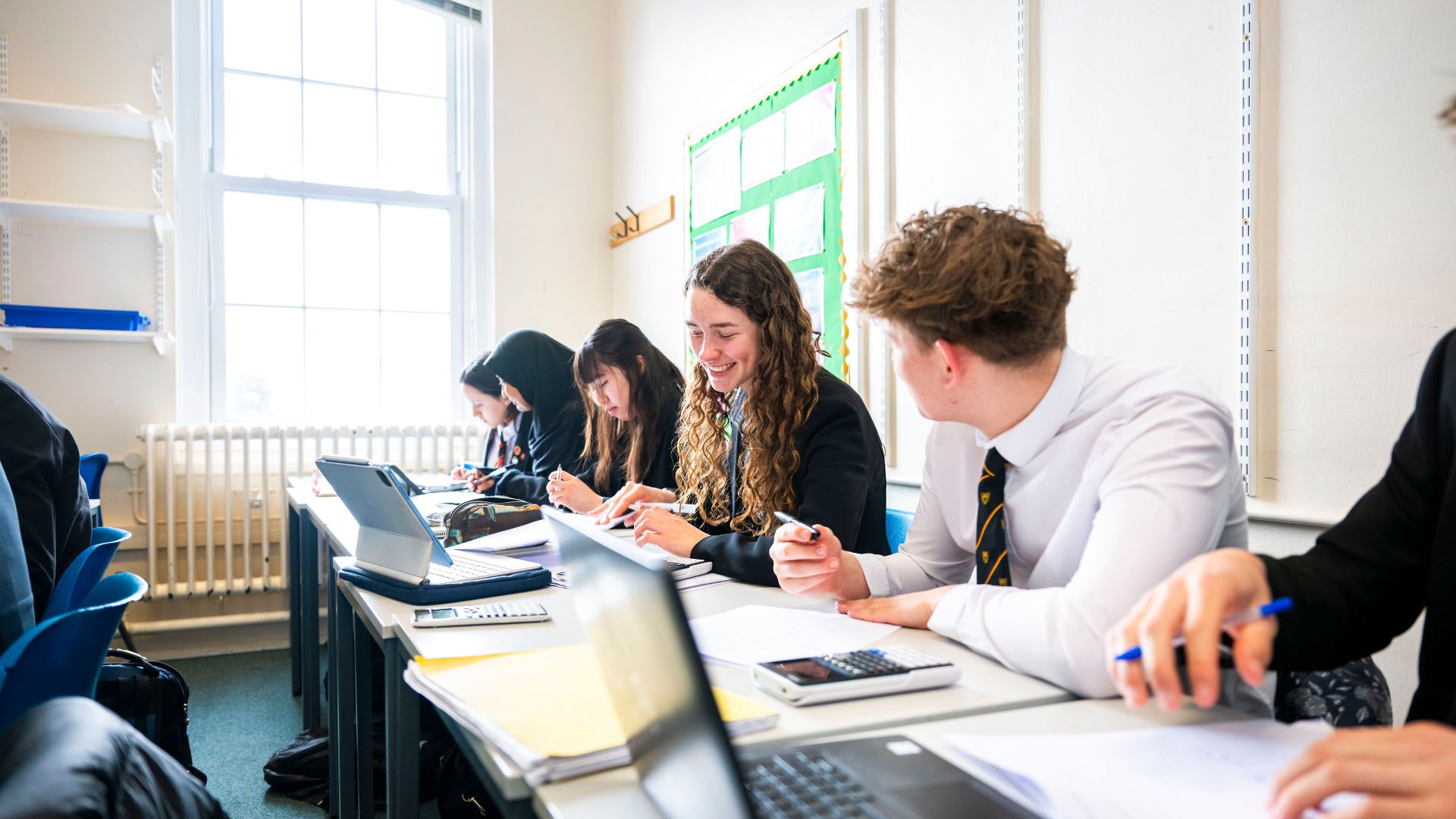
We have identified the following key teaching and learning objectives which are primarily facilitated and enhanced by the use of digital devices at PGS:
- To support collaborative learning.
- To facilitate regular and effective communication between pupils and teachers including homework setting, disseminating personalised feedback and the rapid assessment of understanding in lessons.
- To promote creativity.
- To provide personalised learning and assessment experiences for pupils and to assist teachers in addressing the needs of individual pupils more easily and thereby aiding differentiation.
- To enhance and augment teaching and learning in ways that are otherwise not possible or not easy to do.
- To promote engagement and motivation, both in lessons and outside the classroom when pupils are studying independently.
Frequently Asked Questions
Online safety is of paramount importance. In an increasingly complex digital landscape, where opportunities and risks coexist, our approach is to both protect and educate our pupils. We aim not only to keep children safe online but also to empower them to make the most of the digital world—for their education, social development, and wellbeing. We are really proud of our online safety provision, and we were pleased that this was recognised in June 2025 when we were awarded the 360 degree Online Safety mark for the third consecutive time. To read more about how it is reflected in our curriculum, through guidance on mobile phone use and how we support our families at home, please do click here.