





This week, the article selected from Portsmouth Point for the website is by Samuel VDB in Year 13.
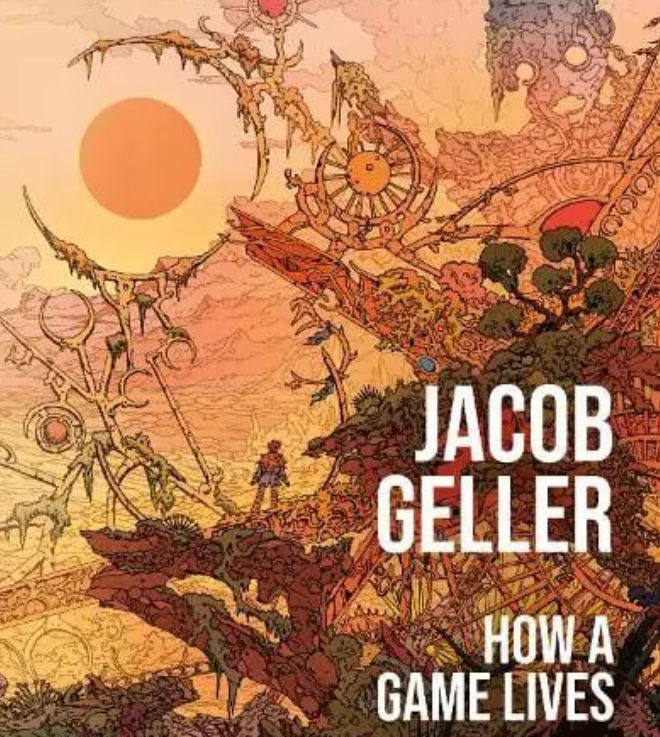
I have been a die-hard fan of Jacob Geller for over a year now, ever since I stumbled upon his video essay entitled “Nothing ever stops existing” - these existential titles are a common theme of Gellers’ work. So, when I saw the Library had a copy of his first book “How a game lives” I was ecstatic it wasn’t just me (probably at least) in this school who appreciated his work. With that said, for the many I am sure who haven’t heard of his work I will try to explain what it is about this book that makes it so great.
For reference, yes to a large extent my own running series of articles on this blog can be understood as a very very amateurish attempt at what Jacob Geller does on a much grander and better scale. It was his essays which inspired me to write about my own interests through video-games, though hopefully with my own added interest in philosophical topics. Gellers’ essays revolve around broad thematic themes, for example “Fear of Dark”, “The future is an empty room”, or “Who’s afraid of modern art”, and presents an analysis of said themes through historical. political and social lenses.
It is this broad range of analysis which gives Gellers’ essays such deep flavour and interest for me, in that he can easily pivot from talking about “Hollow Knight: Silksong” to the historical apocalypticism associated with the book of revelation, or the Gears of War series’ Hammer of God space laser, and Reagan’s own equally fictitious dream of a laser missile defence system, nicknamed Star Wars. In presenting a broad view of various, seemingly random topics, he can identify key ideas that span, well, what one could call anthropology, and draw out conceptions of places, thoughts and ideas across cultures, intellectual schools and artists. This perhaps was demonstrated no better than in his essay “Control, Anatomy and the legacy of the haunted house,” where his links between video game “Control” and “Anatomy” were linked to the novels “House of leaves” and “The haunting of hill house”
How a Game lives takes this, and other preexistent video essays, and expands them with added annotations to explore further thoughts Geller had whilst writing, alongside new (Frankly beautiful artwork) and afterwords by various artists interested in Geller' s work. They allow unique fresh views on the topics of video essays, with the one bringing me most joy comparing “Shadow of the Colossus" to “Moby-Dick” in its fruitless quest.
Beyond anything, though, How a Game lives is a quest to show, well, how a game lives. Geller has mentioned many times online and in the book about his fear of youtube as a platform for artistry, how he is in effect a squatter on digital property he does not own, and that could go dark at any point. A game goes dead, he argues, when it can no longer influence new creations and be experienced in new ways. How a game lives, through its examination of 10 different themes across a huge variety of games, reimagining and re-experiencing them, is in my eyes how games, and all art, can live.