
The article this week is by Mrs Digby.
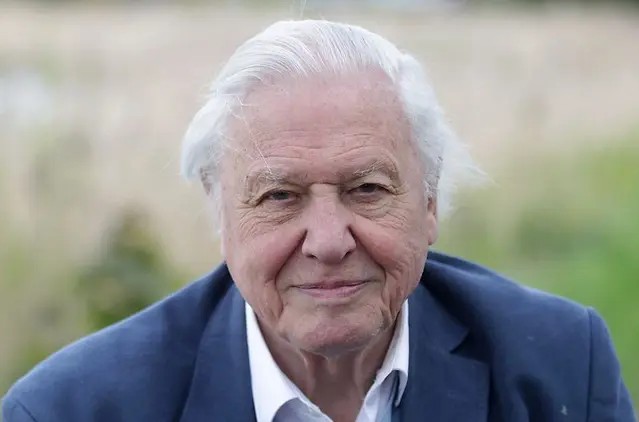
This Friday, May 8th, we celebrate a milestone: the 100th birthday of the national treasure that is Sir David Attenborough.
For over seven decades, Attenborough has been the eyes, ears, and voice of our planet. From the grainy black-and-white beginnings of Zoo Quest in the 1950s to the breath-taking 8K resolution of Secret Garden (2026), he has done more than just document nature— he has fought to keep it front and centre of our collective consciousness.
While the term "national treasure" is often overused, I believe Attenborough is one of the rare individuals who really deserves the term. He is one of the few figures who transcends generations, political divides, and borders. His career has seen him transition from a curious young naturalist to a pioneering BBC executive (where oversaw the first ever colour broadcasts in Europe as controller of BBC2!), and finally to the world’s most trusted elder statesman of the environment.
His accolades are as vast as the ecosystems he has explored:
Dual Knighthoods: Knighted first in 1985 and again as a Knight Grand Cross (GCMG) in 2022.
Scientific Legacy: Over 40 species bear his name, from a prehistoric "sea monster" (the Attenborosaurus conybeari,) to a tiny flightless weevil (Rigonopterus Attenboroughi).
Cultural Icon: Consistently voted one of the UK's most influential figures, standing alongside historical giants as a symbol of integrity and curiosity.
Without the ambition and persistence of Attenborough and his collaborators, millions of us may never have seen some of the world's rarest creatures. It begun in the 1950s on his show Zoo Quest, when he famously caught the elusive Komodo Dragon on film for the first time. But for this generation it was The Blue Planet (series 1, 2001) that showed us the most alien life on earth. The series introduced millions to the wonders of the deep sea and was the first time many species, including the hairy angler fish and the Dumbo octopus, were captured on film.
Perhaps the most profound shift in Attenborough’s legacy occurred in his later years. What began as an effort to show us the beauty of the wild transformed into an urgent plea to save it.
His later works, such as A Life on Our Planet, shifted the narrative from observation to witness statement. He became a global face for the fight against climate change, using his 100-year perspective to illustrate exactly how much we have lost—and how much we still have to fight for.
"The truth is: the natural world is changing. And we are totally dependent on that world. It provides our food, water and air. It is the most precious thing we have and we need to defend it."
Even at 100, Sir David refuses to succumb to "climate doom." His recent work continues to highlight the resilience of nature when given a chance. In his 2026 series Secret Garden, he brings the focus back to our own doorsteps, reminding us that every small patch of biodiversity is a battlefield in the war for the planet's future. So, if you want to give a birthday gift to this national treasure why not take a leaf out of his book and start nurturing the biodiversity on your doorstep. Recycle, don't buy single use plastic, build a bug hotel, eat less meat. Everyone taking their one small step is the key to saving our fragile planet.
As we celebrate his centenary, we don't just celebrate a man; we celebrate the curiosity he sparked in us and the responsibility he placed in our hands. Sir David Attenborough hasn't just spent 100 years on Earth—he has spent them making sure Earth remains a home for us all.