



by Mr James Burkinshaw
Teacher of English & Senior Teacher
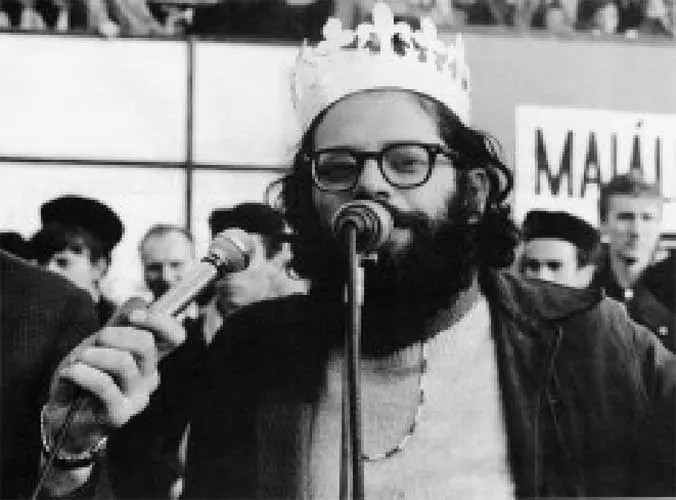
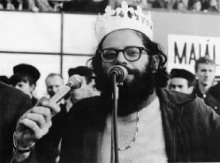
One of the great things about living in New York City’s East Village, in the early 1990s, was the high probability that on any given day you might bump into Allen Ginsberg, one of the great American poets of the twentieth century. Ginsberg lived in the Village for over forty years, and was very much a feature of the local landscape - a charismatic and distinctive figure.
Born on 3rd June, 2026, one hundred years ago today, Ginsberg was probably the most famous of the “Beat” poets, a group of writers who had been at their literary peak in the 1950s and early 1960s in the aftermath of the Second World War. This was a countercultural movement (linked to the musical movement of bebop jazz musicians such as Charlie Parker and abstract expressionist artists such as Jackson Pollock), who sought to critique, and indeed subvert, conventional American culture, in particular social conformity, economic materialism and traditional Christian belief. Ginsberg himself, at different stages of his life, identified as a Communist and a Buddhist, along with other ideologies and faiths: throughout his life he was a ‘seeker’ after transcendent truths. Ginsberg was openly gay during a period when homosexual activity was still illegal in the United States.
Inspired by the visionary English poet, William Blake and the revolutionary American poet, Walt Whitman, Ginsberg sought to introduce a new freedom into poetic form, blurring the lines between poetry and prose, poetry and music, poetry and performance art, his work often achieving incantatory qualities, most famously his epic poem, ‘Howl’, which was the subject of prosecution in 1957, on the grounds of ‘obscenity’ due to its exploration of themes relating to sexuality and drug use that were considered controversial at the time. The case was a historic one, resulting in victory for Ginsberg, and his co-defendant Lawrence Ferlinghetti, the publisher; it set a precedent for literary and artistic freedom in the United States, and beyond (influencing similar cases in Britain, including the famous Lady Chatterley case). The case in many ways represented the beginning of ‘The Sixties’, with a new-found freedom for artists to explore serious themes in an ambitious, creative and uninhibited way.
Allen Ginsberg died in 1997. However, his reputation as a great poet and legal trailblazer remains undimmed (a film about his work and about the prosecution, Howl, came out in 2010). A hundred years after Ginsberg’s birth, we live again in an age of book-banning, on both sides of the Atlantic. His courageous life and inspirational poetry remind us that the greatest art is often seen as dangerous, particularly by those in positions of power, because it encourages people to think for themselves, to see the world differently, and, sometimes, to want to change things. Happy 100th birthday, Allen Ginsberg.