





by Bruno F, Year 12
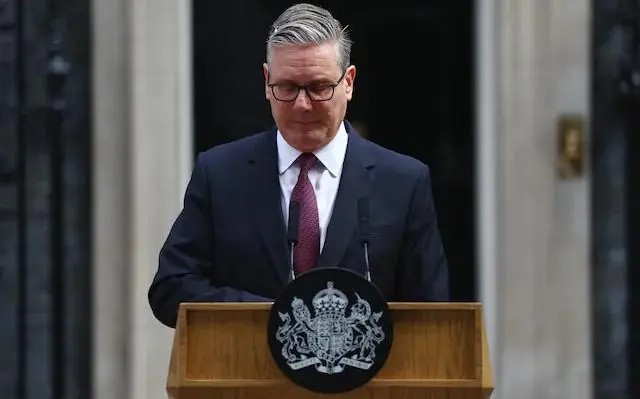 Following Keir Starmer’s resignation announcement on the 22nd June, the United Kingdom will have a new prime minister in the next few months. It is more than likely that his successor will be Andy Burnham, who has begun to set out his intentions for his premiership, if he becomes the new Labour leader. That means that, as a country, we will have had 7 different PMs in the last 10 years. Surely, this sudden rapid turnover of leaders suggests that there are far bigger issues as a country, than the fact that everybody seems to be incapable. This raises the question, is the next Prime Minister doomed to fail? The next occupant of Downing Street will inherit an economy riddled with persistent inflationary pressures, high debt, elevated borrowing costs, and an ageing population. Collectively, these factors severely limit the government's fiscal and political flexibility, making success increasingly unlikely.
Inflation has fallen significantly from its post-COVID high of 11%, reaching 2.8% in May 2026 and landing within the Bank of England's $2\% \pm 1\%$_ target. While this suggests better economic times ahead, the drop masks a deeper issue: persistent inflationary pressures continue to build within wage growth and the services sector. These components are, typically, slower to adjust than the inflation of goods, and tend to reflect domestic economic rigidity rather than global price shocks, such as the war in the Middle East. As a result, even when inflation appears to be becoming more stable, households will continue to feel cost pressures. This will create a major political problem for any incoming PM. Real wage growth remains weak, meaning improvements in macroeconomic indicators don't translate into improved living standards. In these conditions the public's perception of economic failure would persist even when statistically, stabilisation is suggested.
This inflationary backdrop is closely linked to the UK’s deteriorating fiscal position. Public sector debt is now close to 95% of GDP, equivalent to roughly £2.9 trillion. This places the UK at historically high levels of indebtedness outside of wartime or crisis conditions. This matters because it significantly reduces the government's fiscal flexibility at a time when Government borrowing costs have also risen sharply. Higher interest rates mean debt servicing consumes a large amount of public spending, resulting in unpopular decisions having to be made to fund spending on key areas. At the same time, government bond guilt yields remain close to 5%, at 4.7%, on 10 year bonds. This will increase the cost of new borrowing and ensure that international markets remain sensitive to fiscal credibility. These two factors combined mean a tightening on government policy. If they try to expand spending, they have to make difficult, potentially politically damaging decisions to finance them. This may come in the form of higher taxation, cuts to services such as the NHS and welfare, or even further borrowing…
Alongside these immediate economic pressures, the UK also faces a structural demographic issue; an ageing population is steadily increasing the number of citizens on state pensions, and healthcare. At the same time, the working age population is struggling. Youth unemployment is at 16.2%, the number of people with debt due to University and education is rising, while the working age population is increasingly inactive. This limits the amount of taxation that the government can gain to then spend on the elderly and elsewhere. This will create an imbalance between rising revenue and spending commitments, which cannot be changed in a 5 year term, let alone the 3 years the next PM is being given, making meaningful policy innovation further limited. This may mean that it’s curtains for the next PM.
Is there actually anything they can do?
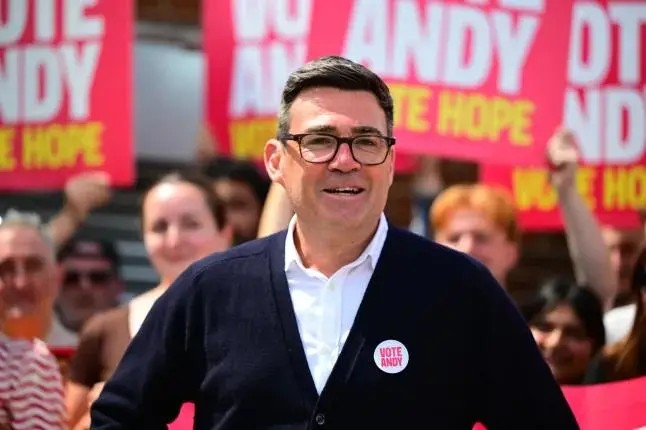 When taken as a whole, the combination of these factors suggests the next PM, most likely Burnham, will operate within one of the most constrained systems ever known to UK politics, rather than the flexible one which is arguably needed. Traditional qualities, such as leadership and charisma will be more relevant than ever. They will need to constantly articulate how their decisions will be of benefit to the British people, something which was Starmer's Achilles heel. Overall, the likelihood of political success appears limited, and failure, for me, becomes an expectation.